 Editor's Pick
Louvre Abu Dhabi
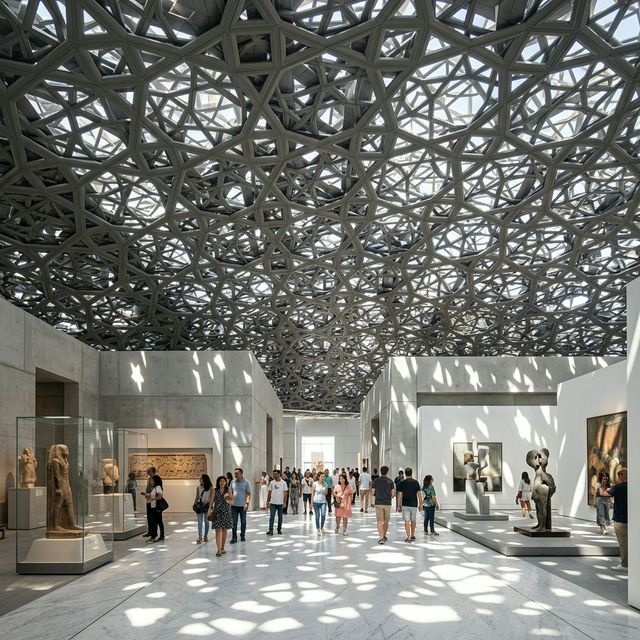
Beneath a breathtaking geometric dome that weighs more than the Eiffel Tower, the Louvre Abu Dhabi weaves together 12,000 years of human creativity. Architect Jean Nouvel designed the 7,850-star canopy to replicate the dappled light beneath palm tree oases — creating an ever-shifting constellation of shadows across pristine white galleries. The permanent collection spans ancient Egyptian sarcophagi, Rembrandt oil paintings, Chinese ceramics, and contemporary video installations, all presented in a revolutionary non-chronological narrative that reveals surprising connections between distant civilizations. Recent acquisitions include works by Cy Twombly and a rare 13th-century astrolabe, while rotating exhibitions bring masterpieces from partner institutions including the Musée d'Orsay and the British Museum. Plan at least three hours — you will need every minute.
 Must-See
Museum of the Future
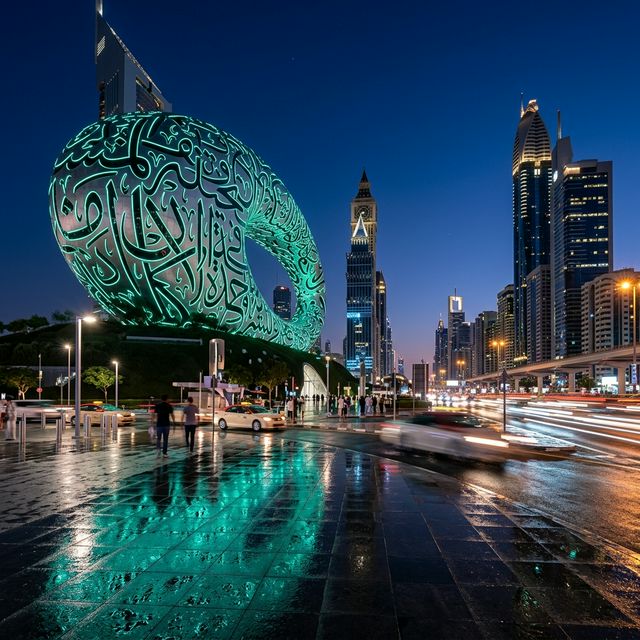
Voted one of the 14 most beautiful museums on the planet by National Geographic, this silver torus rising above Sheikh Zayed Road is a love letter to human ingenuity. The facade — 1,024 stainless-steel panels inscribed with poetry by Emirati artist Mattar bin Lahej — is illuminated at night in a display that has become Dubai's most photographed landmark. Inside, you embark on a multi-sensory odyssey that begins with a simulated rocket launch to a space station orbiting Earth in 2071. Subsequent floors explore DNA libraries preserving endangered species, AI-powered ecosystems, and the Al Waha wellness sanctuary inspired by UAE desert landscapes. Each exhibition blends cutting-edge technology with philosophical questions about consciousness, meaning, and our collective future. A genuinely transformative experience.
 Best Value
Sharjah Museum of Islamic Civilization
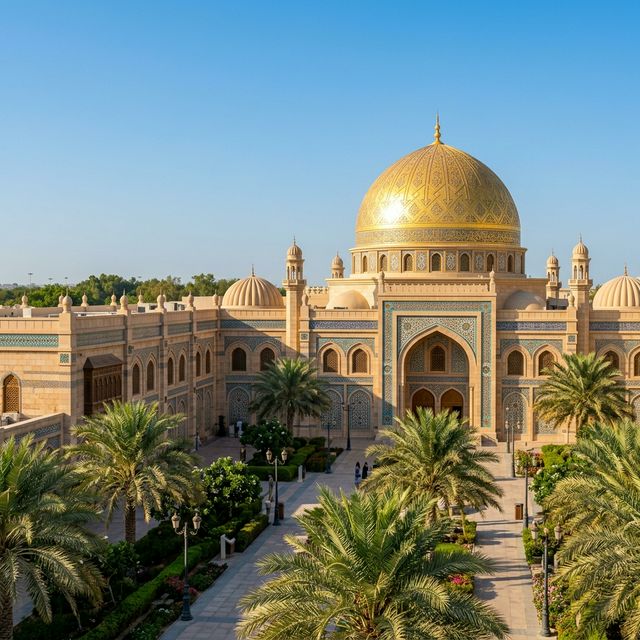
Housed inside a magnificently restored traditional souq crowned with a luminous golden dome, this museum offers one of the most comprehensive surveys of Islamic art and science in the Gulf region. Across four themed galleries, over 5,000 artifacts trace 1,400 years of innovation — from the algebra textbooks of Al-Khwarizmi to exquisite Mamluk metalwork and Ottoman Iznik ceramics. The Ibn al-Haytham Gallery of Science and Technology is particularly compelling, demonstrating Islamic civilization's foundational contributions to optics, medicine, astronomy, and navigation that shaped the modern world. Established under the vision of Sheikh Dr. Sultan bin Muhammad Al Qasimi, the Ruler of Sharjah and a distinguished historian, this museum reflects the emirate's unwavering commitment to cultural scholarship and intercultural dialogue.
 Landmark
Grand Egyptian Museum
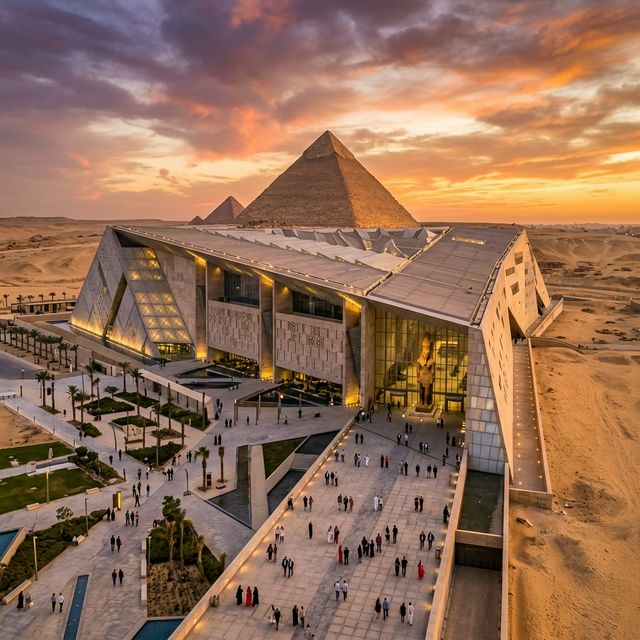
This is the museum that Egypt has been building toward for a century. Positioned on 120 acres at the edge of the Giza Plateau — with uninterrupted sight lines to all three Great Pyramids — the Grand Egyptian Museum is the largest archaeological museum ever constructed. The entrance hall alone will leave you speechless: an 83-tonne colossus of Ramesses II greets visitors beneath soaring concrete canopies that echo the geometry of the neighboring pyramids. The crown jewel is the complete Tutankhamun gallery, reuniting all 5,398 objects from the young pharaoh's tomb for the first time since Howard Carter opened the sealed chambers in 1922. Designed by Dublin-based firm Heneghan Peng Architects, the building itself is a masterwork of triangulated glass and Aswan granite that makes this both a museum and a monument.
 Heritage
The Jordan Museum
Jordan's national museum commands a hillside in downtown Amman with an authority befitting its extraordinary collection. The undisputed stars are the Dead Sea Scrolls — parchment fragments including passages from the Book of Isaiah dating to 150 BCE, among the oldest surviving biblical manuscripts on Earth. Equally remarkable are the 'Ain Ghazal statues: lime-plaster anthropomorphic figures sculpted roughly 9,000 years ago, making them among the earliest monumental sculptures in human history. Beyond these treasures, the museum's 10,000 square meters of gallery space chronicle Jordanian civilization from the Lower Paleolithic era through the Nabataean, Roman, Byzantine, and Islamic periods to the modern Hashemite Kingdom. Interactive multimedia displays and a dedicated children's education wing make this as engaging for young visitors as for seasoned historians.
 UNESCO
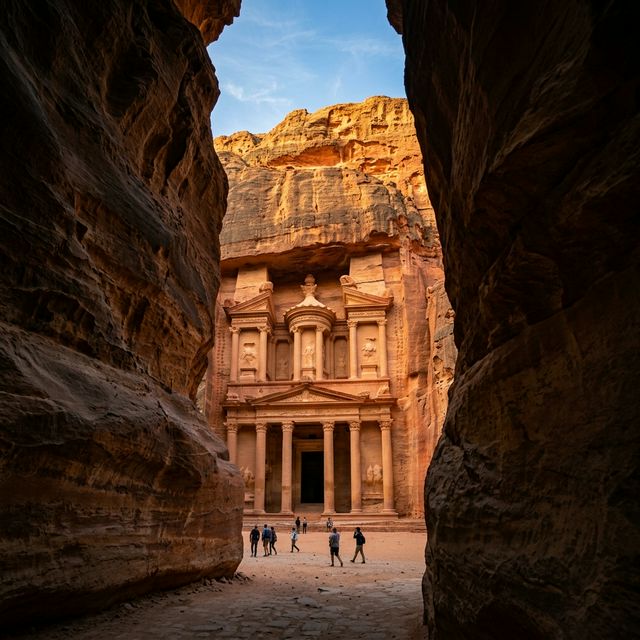
Petra Archaeological Museum
Positioned at the entrance to one of the New Seven Wonders of the World, this purpose-built museum unlocks the secrets of the Nabataean civilization that carved an entire city from rose-red sandstone cliffs two millennia ago. Developed in partnership with the Japanese International Cooperation Agency (JICA) and inaugurated in 2019, the museum showcases over 280 carefully curated artifacts recovered from decades of archaeological excavations — including painted Nabataean pottery, bronze figurines of deities, carved limestone reliefs, and delicate gold jewelry that reveal the extraordinary sophistication of a culture that dominated the ancient incense trade routes stretching from southern Arabia to the Mediterranean. Interactive 3D reconstructions and scale architectural models allow you to visualize Petra as it appeared at its zenith in the 1st century CE, transforming your subsequent walk through the Siq canyon into an incomparably richer experience.